

transcript.im
transcript.im turns YouTube, TikTok, and Instagram links into clean, timestamped transcripts with AI summaries, translations, and multiple export formats.
AI AudioAI WritingFreeWebPublic0 Views
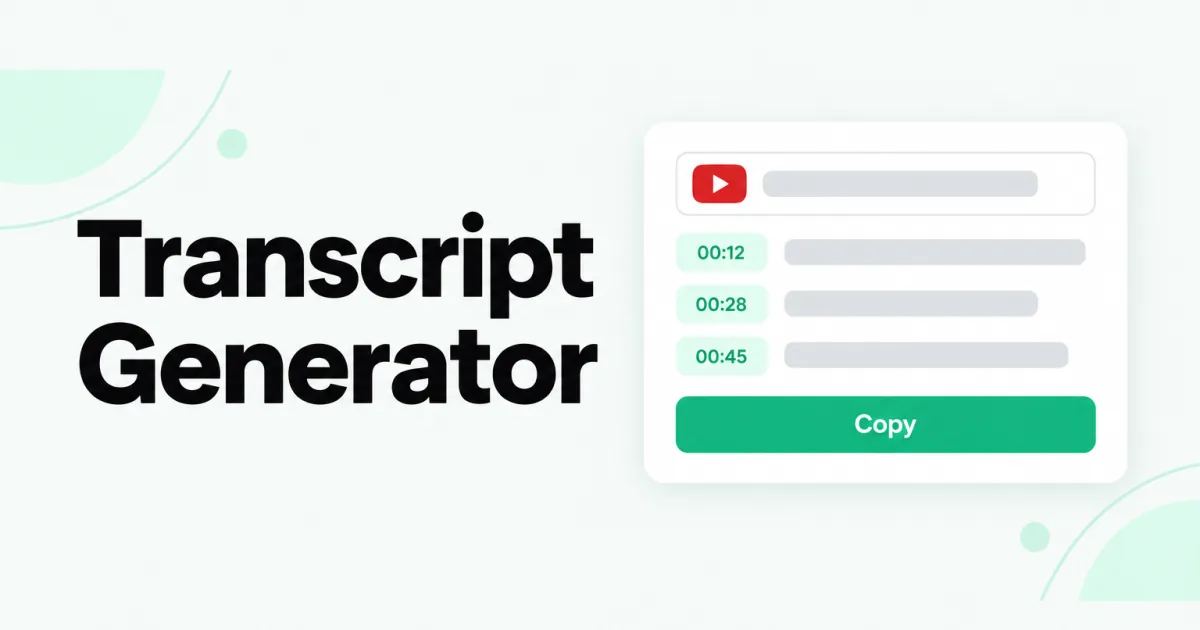
Screenshots
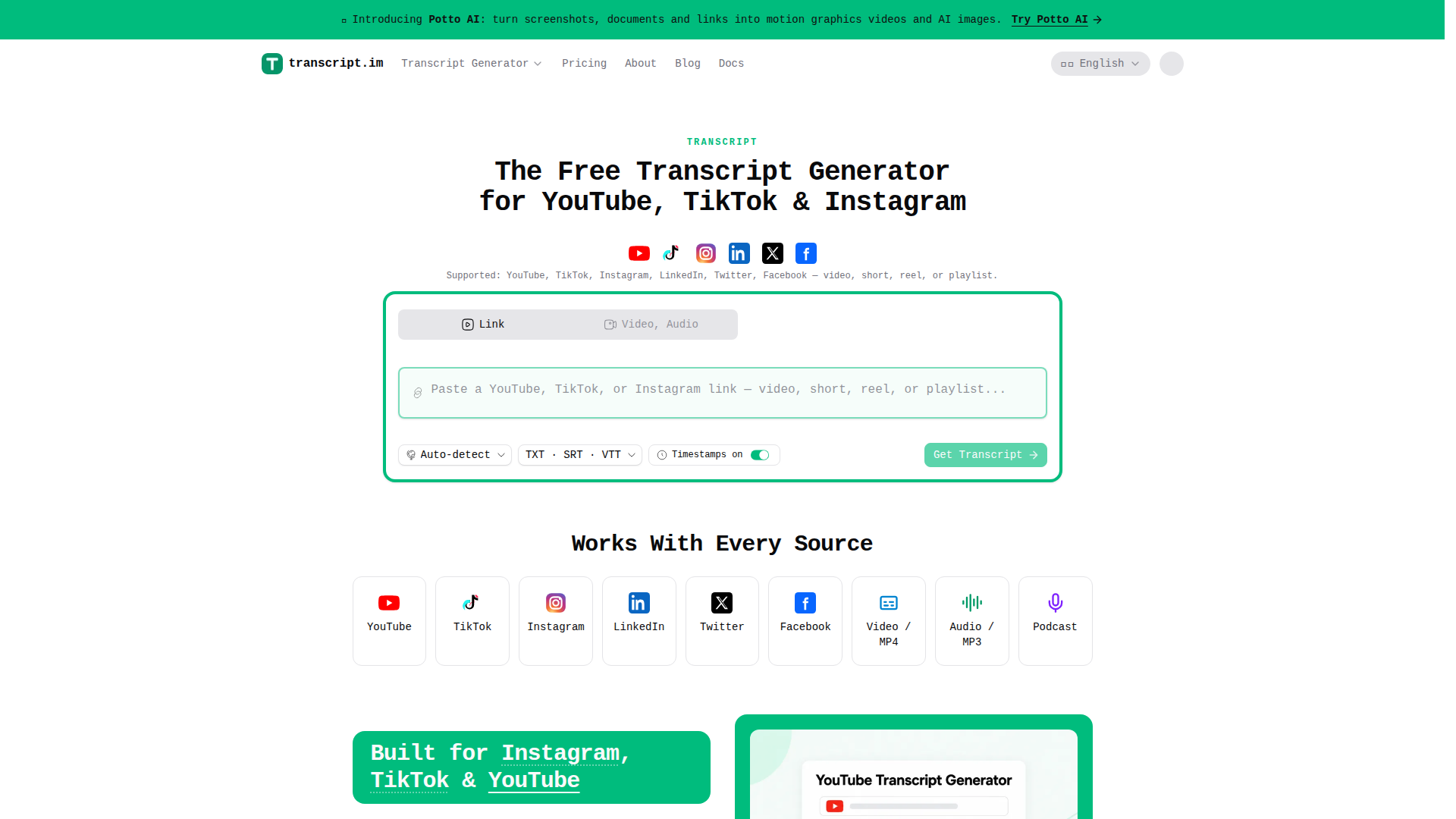
About this product
transcript.im is a free, browser-based AI transcript generator built for the short-form and long-form video era. Its positioning is a single, frictionless utility: paste a link from YouTube, TikTok, Instagram, LinkedIn, Twitter/X or Facebook — a full upload, a Short, a Reel, or an entire playlist — or upload a local MP4, MOV, MP3, M4A, WAV or FLAC file, and receive clean, timestamped text in seconds. Its target audience spans content creators and social media managers repurposing video into scripts, blog posts and newsletters; marketers producing localized ad variations and captioned edits across 7 supported languages; students, researchers and journalists turning lectures, interviews and podcasts into searchable notes, summaries, chapters and mind maps; sales teams building transcript-backed follow-ups and segmented pitches; and developers who need programmatic access through its Transcript API, MCP server and Skills. Core features include captions-first, AI-second transcription (existing caption tracks are reused when available, and AI transcribes the spoken audio only when they are missing), timestamped lines that let you jump to the exact moment a phrase was spoken, TXT/SRT/VTT export, one-click translation with timestamps preserved so subtitles stay in sync, AI summaries, outlines, chapters and mind maps, and bulk mode with four concurrent extractions, per-item status, retry-on-failure and merged ZIP/TXT/CSV/SRT exports. Content-wise, the site is heavily SEO-structured around hundreds of intent-driven landing pages (YouTube to MP3, Instagram Viewer, podcast transcript, meeting notes, lecture notes, mind map generators and more), backed by an active blog, documentation and a public FAQ. The user experience is deliberately minimal — one paste field, one button, no signup wall for the basic flow — and the technical stack leans on caption harvesting plus speech-to-text fallback, WebVTT-standard output, Model Context Protocol integration and an llms.txt file for AI discovery.
Similar products
 Infographic Generator AITransform data into beautiful infographics with our AI-powered tool!
 InvofoxInvofox simplifies document management through powerful AI-driven data extraction, enabling software solutions for businesses of all sizes.
 Magical Children's BookCreate magical personalized children's books with AI-generated stories and illustrations, tailored for each child.