

Navarch
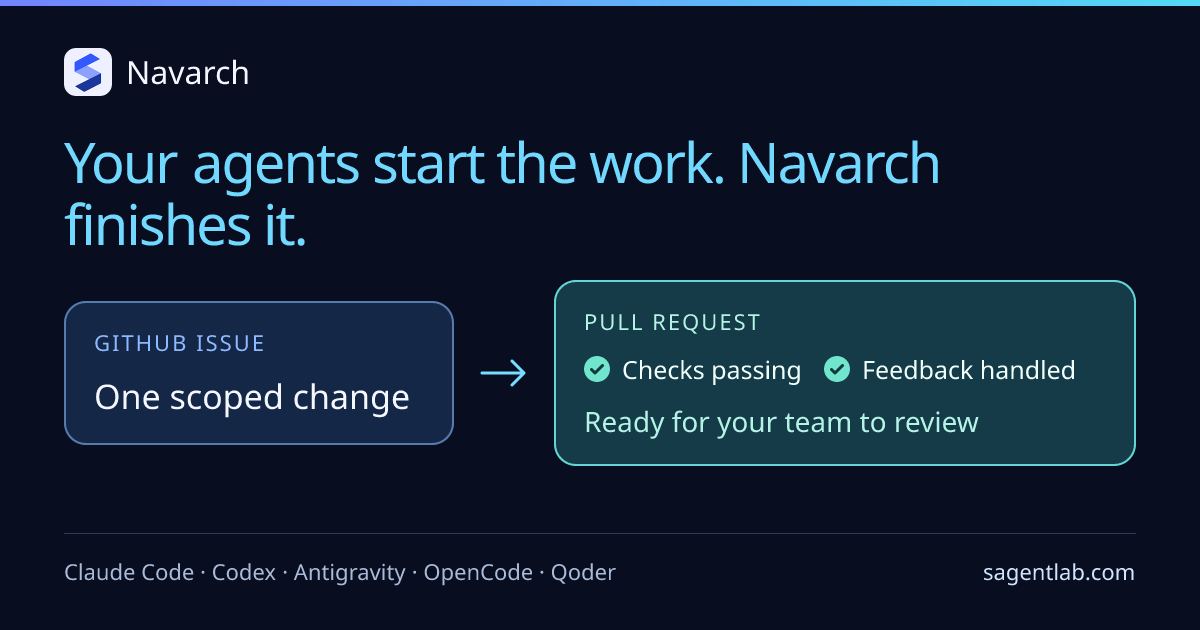
Navarch orchestrates Claude Code, Codex, and Gemini to run your backlog, delivering reviewable pull requests with minimal supervision and clear human control.
AI 编程AI 智能体有免费套餐网页公开0 浏览
截图
关于这个产品
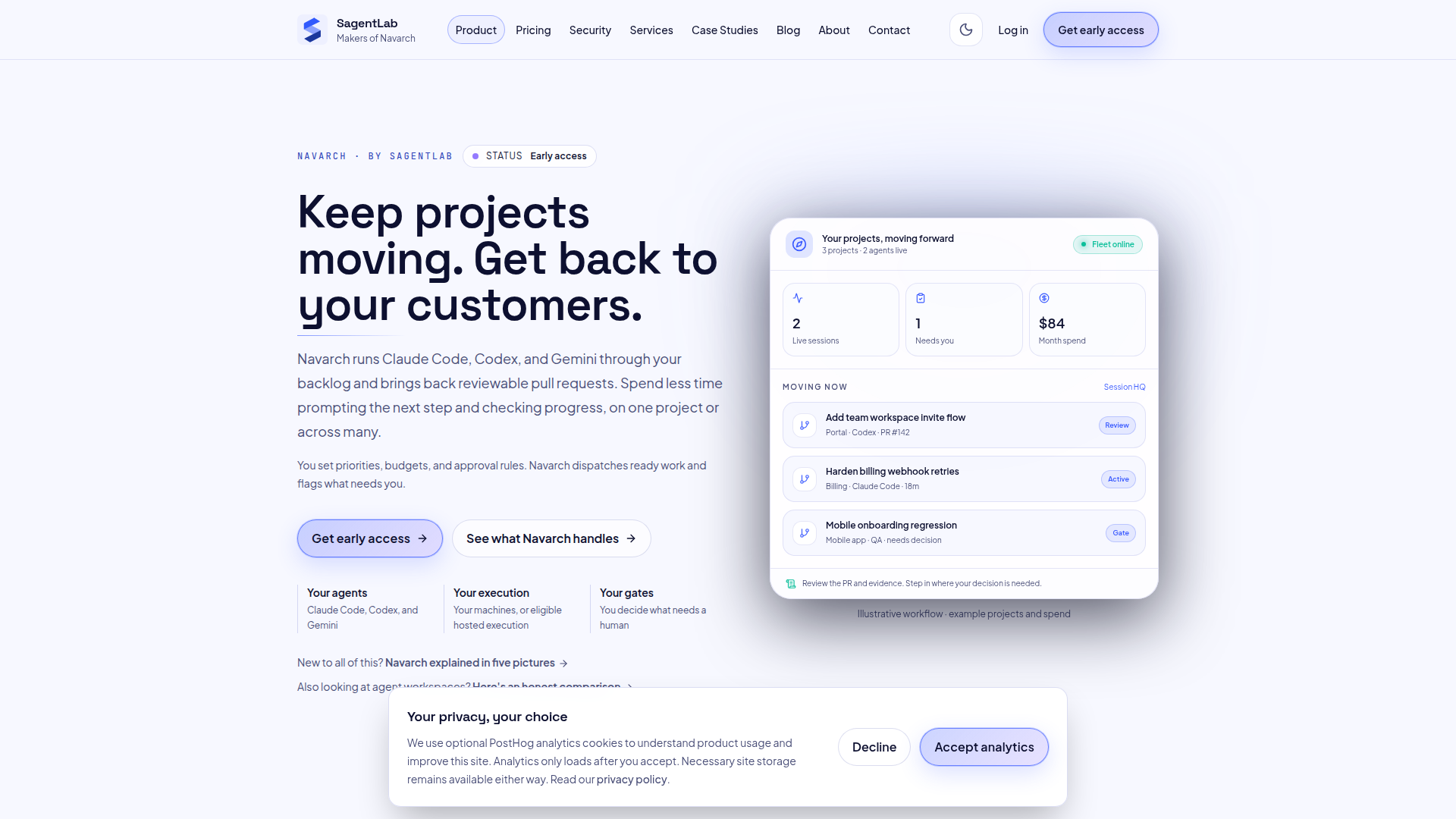
Navarch is an AI project manager for coding agents, built by SagentLab. Rather than replacing the tools a team already uses, it adds the coordination layer around them: it pulls work from the backlog, dispatches ready tasks to Claude Code, OpenAI Codex, or Gemini CLI, and brings back ordinary, reviewable GitHub pull requests with tests, CI status, and supporting evidence attached. Positioned as an orchestration and oversight product rather than a code generator, Navarch is aimed at software agencies and small engineering teams that maintain several products at once and want to keep projects moving without babysitting agent sessions. Its core features include a project overview showing health, priority, live sessions, waiting approvals, and monthly spend; a board that mirrors how agents work, running from intake through backlog, queued, active, review, blocked and done, with milestones, dependencies and the ability to pull finished tasks back for another pass; Session HQ for watching and steering live sessions, including posting mid-run guidance that an agent picks up on its next heartbeat in the same worktree; a unified approvals inbox for sign-offs, blocked work, stalled sessions, and escalated reviews across every project; and a GitHub-native review flow where you open the diff, check the evidence, and merge straight from the task. Technically, Navarch runs a small runtime on your own hardware — connected with a single-use, project-scoped command and bound to exactly one project — or offers hosted execution with prepaid funds held per task and unused funds returned. Sessions are isolated in Docker or guarded host worktrees, runtime self-updates wait for active sessions to finish, verify the package, health-check, and roll back if unhealthy, and encrypted project secrets are only handed to an active, eligible lease. Control is granular: priorities, monthly budgets, merge policies, default models, effort per task, concurrency limits, allowed agents, and role-based permissions (owner, approver, member, viewer) are set per project, supported by an append-only project timeline and Slack or in-app alerts that push exceptions to you. Context such as steering docs, playbooks, and architecture notes lives as versioned markdown in a repository you own, so the whole system stays readable, auditable, and portable.
同类产品
 MkdirsLaunch your directory website effortlessly with Mkdirs, featuring built-in monetization and customization options.
 PearAISupercharge your coding experience with PearAI, the open-source AI code editor integrating the best AI tools.
 3DLogo AIExperience 3DLogo AI, the ultimate AI 3D logo generator for custom branding solutions tailored to elevate your business identity.